
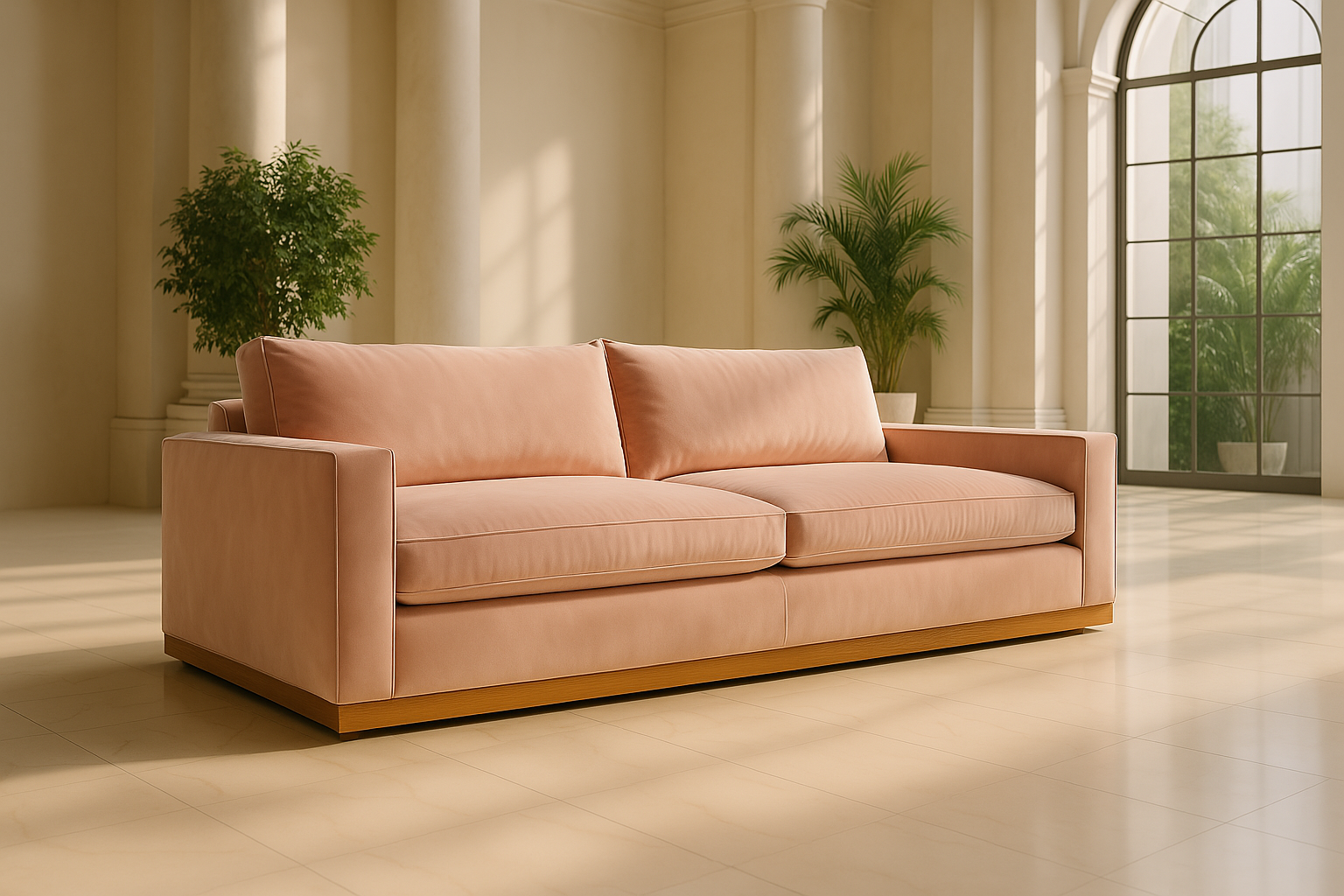
Dreamsofa Alton Sofa
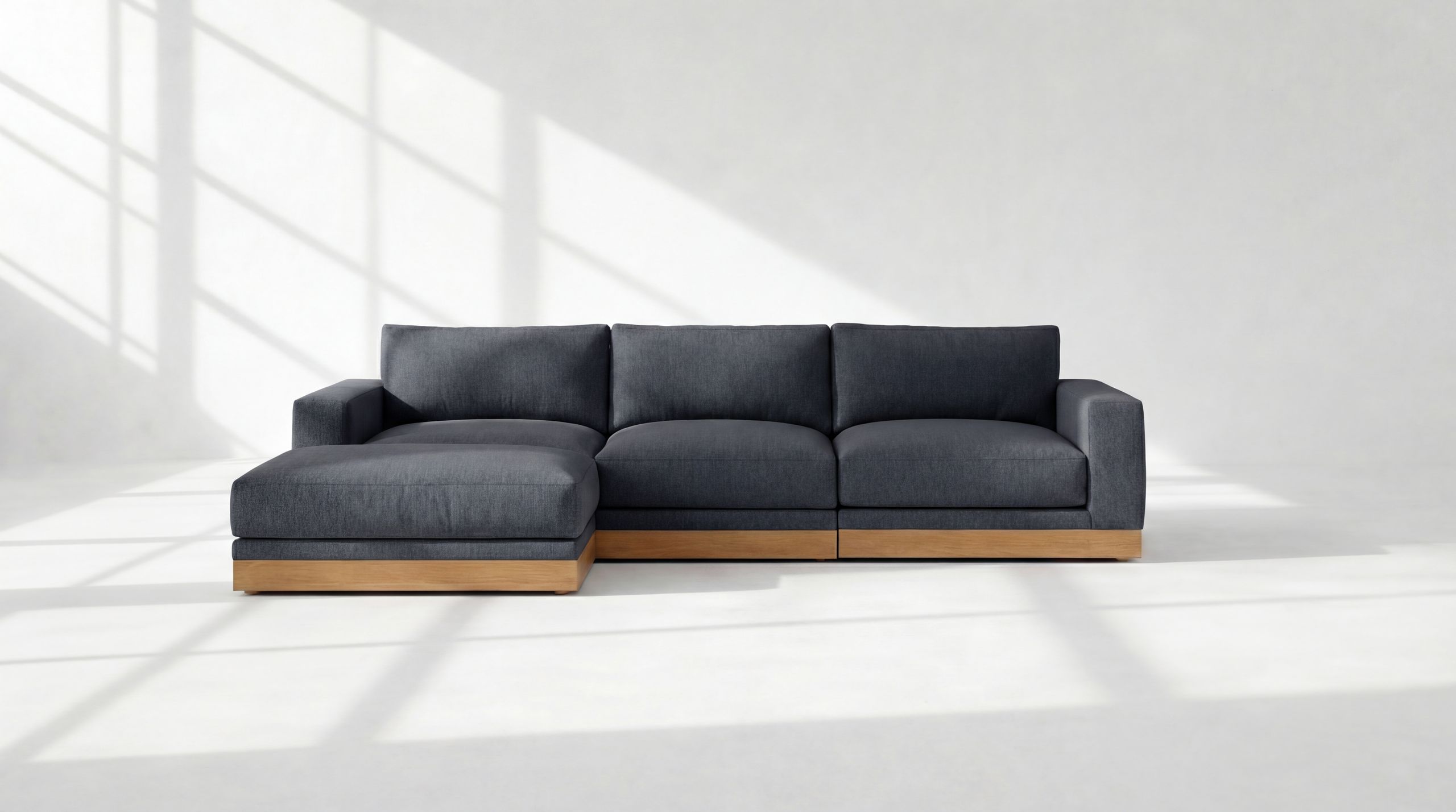
Once a niche upgrade for high-traffic commercial spaces, stain- and wear-resistant textiles are now the most commonly requested fabric category
BEVERLY HILLS, CA, UNITED STATES, July 24, 2026 /EINPresswire.com/ -- For most of the modern furniture industry's history, fabric selection was framed as a trade-off: buyers could choose textiles that looked and felt luxurious, or textiles that could survive daily contact with pets, children, and spilled
coffee, but rarely both at once. That framing is becoming outdated, according to DreamSofa, a direct-to-consumer custom furniture manufacturer, which says performance fabrics — engineered textiles designed to resist stains, abrasion, and fading — have quietly become the single most requested fabric category among its residential buyers, overtaking traditional upholstery-grade cotton blends and standard velvets.The company says the shift reflects a change in how buyers think about furniture rather than a change in household composition. Homes with pets and young children are nothing new; what has changed, DreamSofa says, is that buyers increasingly refuse to accept that a sofa built around those households has to look institutional. "The old assumption was that durability meant compromise — darker colors, stiffer weaves, furniture that looked like it was bracing for impact," said a DreamSofa spokesperson. "What buyers are asking for now is furniture that looks like a design choice and performs like contract furniture. The fabric technology to deliver both has existed for years. What's new is that residential buyers know about it and ask for it by name."
What "Performance Fabric" Actually Means
The term covers a family of textiles rather than a single product, and DreamSofa says part of its customer education effort involves separating the engineering from the marketing. Broadly, performance fabrics achieve their durability through one or more of three mechanisms: solution-dyed fibers, in which color is embedded in the fiber itself during manufacturing rather than applied to the surface afterward, making the fabric far more resistant to fading and harsh cleaning; high abrasion resistance, typically measured in double rubs on the Wyzenbeek test, where residential-grade fabric commonly rates around 15,000 to 25,000 double rubs and contract or performance grades commonly exceed 50,000 to 100,000; and fluid-repellent finishes or inherently hydrophobic fibers that cause spills to bead on the surface rather than soak into the cushion below.
DreamSofa says it specifies abrasion ratings and cleaning codes for every fabric in its catalog, and encourages buyers with pets or children to filter for fabrics rated above 50,000 double rubs — a threshold historically associated with hospitality and office furniture rather than living rooms. The company notes that a high double-rub rating alone does not guarantee stain resistance, and vice versa, which is why it recommends buyers evaluate the two properties separately rather than relying on the word "performance" on a label.
The PFAS Question
The rise of performance fabrics has coincided with growing scrutiny of how some stain-resistant finishes are made. Several widely used fluid-repellent treatments have historically relied on per- and polyfluoroalkyl substances, commonly known as PFAS or "forever chemicals," a class of compounds that has drawn regulatory attention in multiple U.S. states due to environmental persistence. DreamSofa announced earlier this year that it is removing PFAS-based finishes from its textile program, and says the performance fabrics it now specifies achieve stain resistance through PFAS-free finishes and inherently stain-resistant fiber construction, such as solution-dyed acrylics and olefin blends, rather than fluorinated coatings.
The company says this distinction has become a purchasing factor in its own right. According to DreamSofa, customer inquiries mentioning PFAS, chemical finishes, or fabric safety have increased noticeably over the past year, particularly among buyers with young children — the same segment most likely to request performance fabrics in the first place. "The customer asking for a stain-proof sofa and the customer asking what's in the stain-proofing are increasingly the same person," the spokesperson said.
Pets Are Driving Specific Engineering Requests
Among pet-owning households, DreamSofa says the most common fabric concerns are consistent enough to have shaped its recommendation guidance: resistance to claw snags, which favors tight, flat weaves over loose bouclés and chenilles; ease of hair removal, which favors smooth-finish textiles over deeply textured ones; and moisture resistance for accidents. The company says it steers pet owners away from delicate loop-pile weaves regardless of their abrasion rating, since snag damage is mechanical rather than abrasive and is not captured by double-rub testing — an example, DreamSofa says, of why a single durability number cannot substitute for matching fabric construction to the actual household.
Because every DreamSofa piece is made to order, the company says fabric choice does not constrain the rest of the design: the same sectional configuration can be built in a delicate linen for one household and a 100,000-double-rub performance weave for another, at the same dimensions. DreamSofa offers fabric swatches before purchase so buyers can test cleaning behavior and texture at home — a step the company says it actively encourages for households planning around pets or children, since a fabric's real-world feel and cleanability are difficult to judge from photographs.
Durability as a Sustainability Argument
DreamSofa also frames the performance fabric shift as part of a longer-lifespan approach to furniture generally. A sofa that is structurally sound but visibly stained or worn is, in practice, often replaced rather than cleaned or recovered, which means fabric failure — not frame failure — is frequently what sends otherwise usable furniture to a landfill. By pairing high-durability textiles with kiln-dried hardwood frames backed by a lifetime warranty, the company says it is trying to remove both of the most common reasons a sofa gets discarded early. "Nobody throws out a sofa because they're bored of it as often as they throw one out because it looks tired," the spokesperson said. "If the fabric still looks right after a decade of dogs and homework and movie nights, the whole replacement cycle slows down."
What Buyers Should Ask For
For buyers evaluating performance claims — from DreamSofa or any manufacturer — the company suggests a short list of concrete questions: the fabric's double-rub rating and test method; whether stain resistance comes from fiber construction or an applied finish, and whether that finish is PFAS-free; the fabric's cleaning code; and whether the manufacturer will supply physical swatches before purchase. DreamSofa says it publishes this information for its own catalog and considers transparent fabric specification a baseline the wider industry should meet, particularly as "performance" becomes one of the most heavily used — and least consistently defined — words in furniture marketing.
A Standard Borrowed From the Trade
DreamSofa notes that the performance category did not originate in living rooms: these textiles were developed for hospitality, healthcare, office, and marine environments, where fabric is specified against measured use projections and replaced on budgeted cycles. Its migration into residential furniture followed the same path as many durable-goods upgrades — contract-grade engineering arriving in homes once direct-to-consumer models removed the retail markup that once made it a luxury specification. The company says its own trade business accelerated this crossover internally: fabrics proven in its developer and short-term-rental orders, where furniture must survive continuous turnover use, now appear in its residential program with the same published specifications. A fabric that holds up in a vacation rental hosting new guests every week, the company argues, is simply a household fabric tested at fast-forward speed.
About DreamSofa
DreamSofa is a direct-to-consumer custom furniture manufacturer specializing in made-to-order sofas, sectionals, modular seating systems, and sleeper sofas built on kiln-dried hardwood frames. Every piece is built to a customer's specifications with customer-selected fabrics, and is backed by a lifetime frame warranty and a 100-day home trial. More information is available at www.DreamSofa.com.

No comments:
Post a Comment